Happy Friday! ☀️🌴
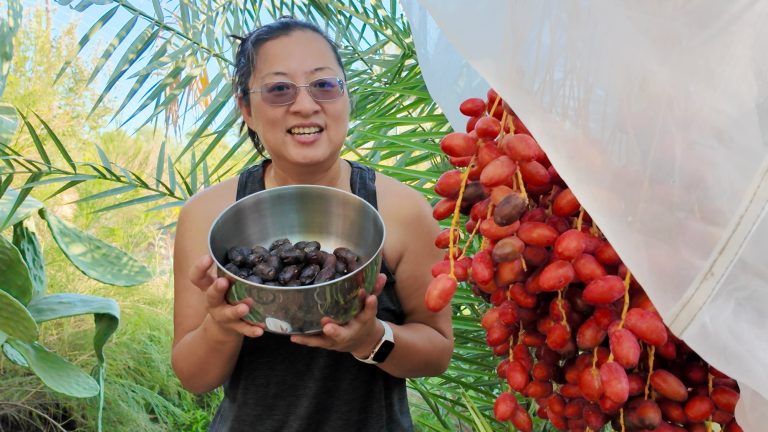
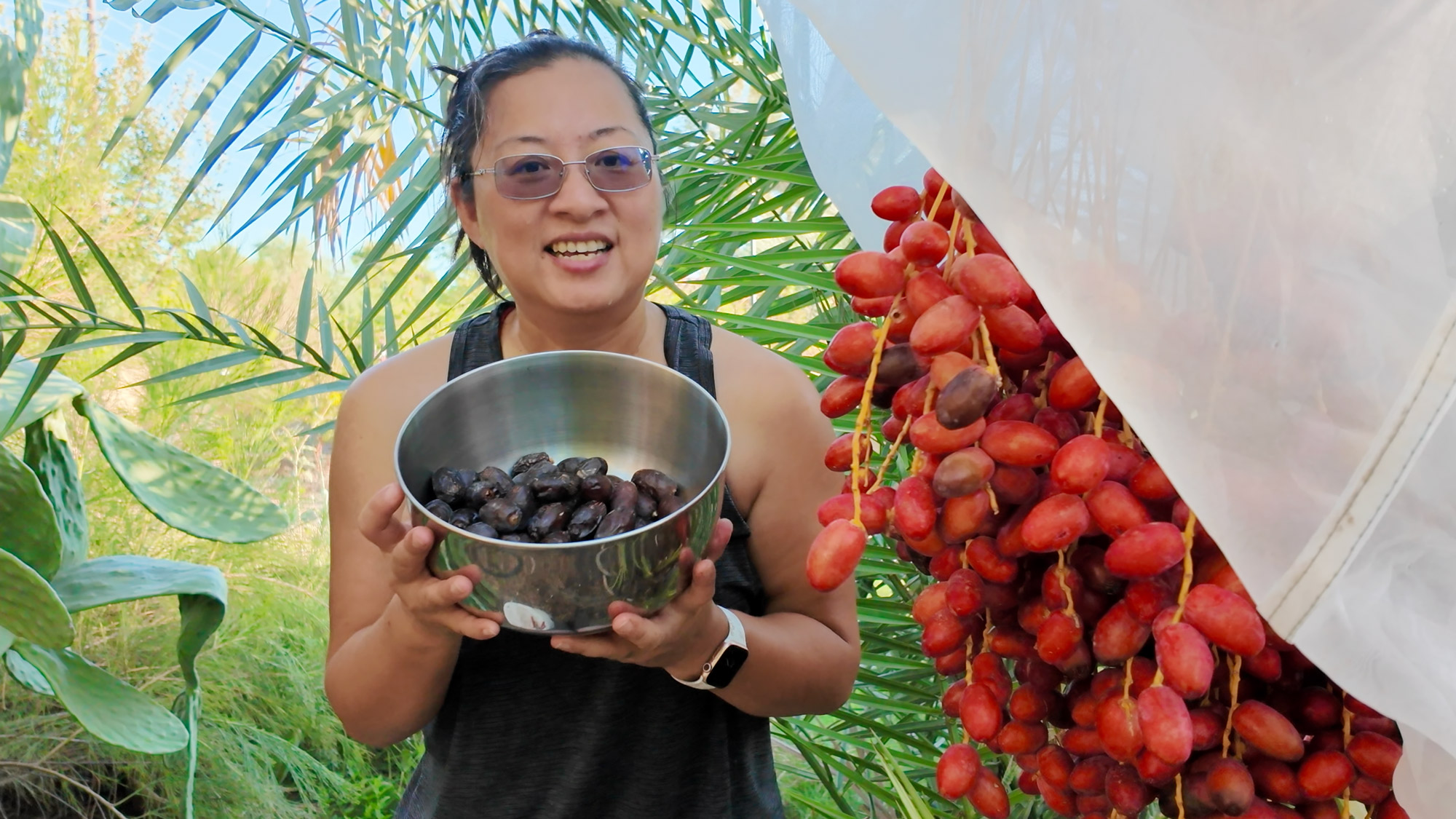
We started the morning harvesting just under 2 lbs of Black Sphinx dates from one of our clusters!
There are still plenty more ripening on the palm, plus three more clusters waiting for us. But after this morning’s harvest, I was completely drenched in sweat. We’ll save the rest for another morning. 😆
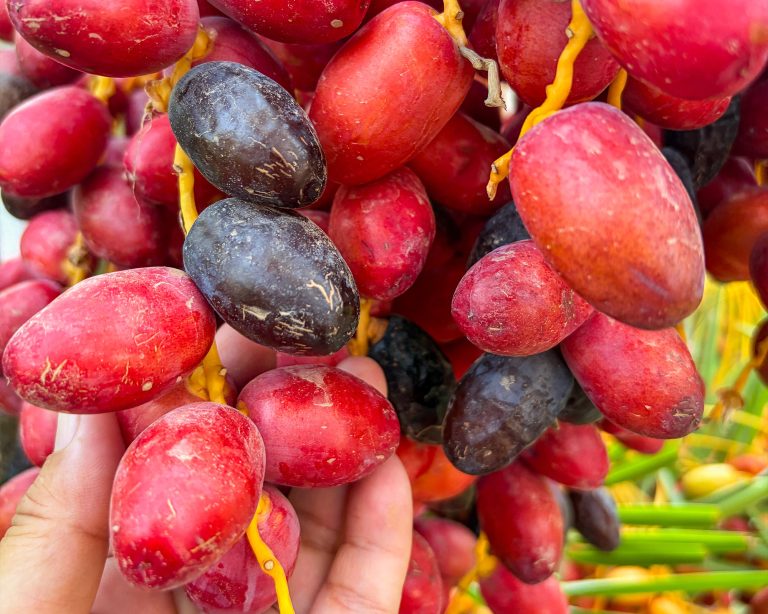
Black Sphinx dates don't ripen at the same time, we check once or twice a week to harvest. The dates are covered in dust from recent monsoon dust storms.
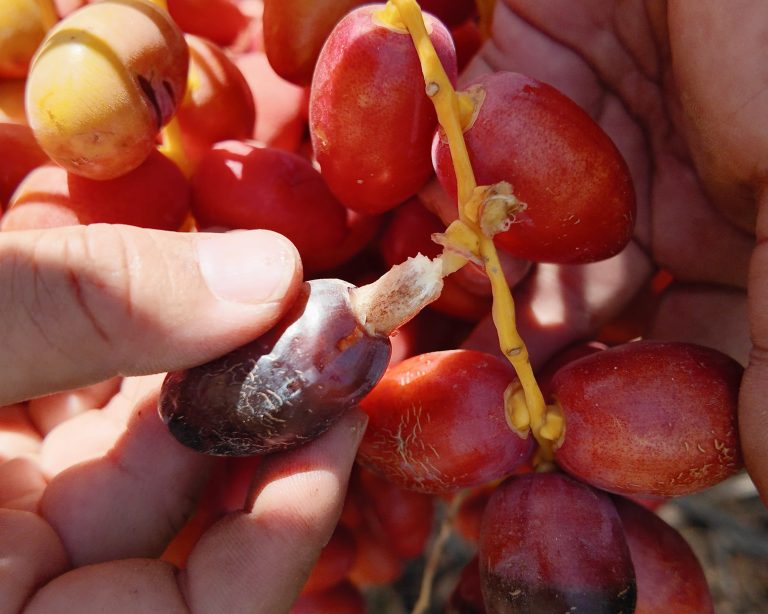
We harvest dates by gently pulling the ripe date from its perianth and leave the pit/seed on the plant still attached to the perianth.
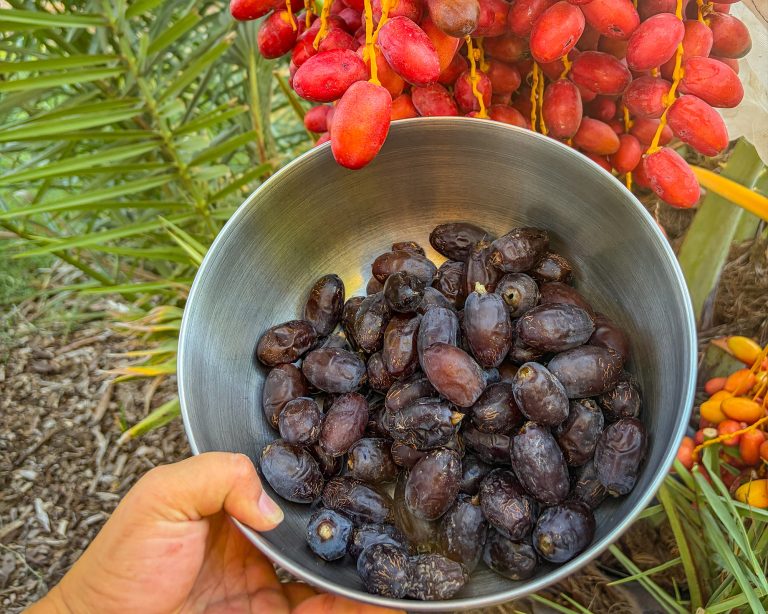
It still amazes me that we can walk into our backyard and harvest fresh dates right off the palm, especially one with such a special connection to Phoenix history.
The Black Sphinx date originated as a chance seedling discovered by Roy Franklin on a property in Arcadia, a neighborhood in Phoenix, in 1928.
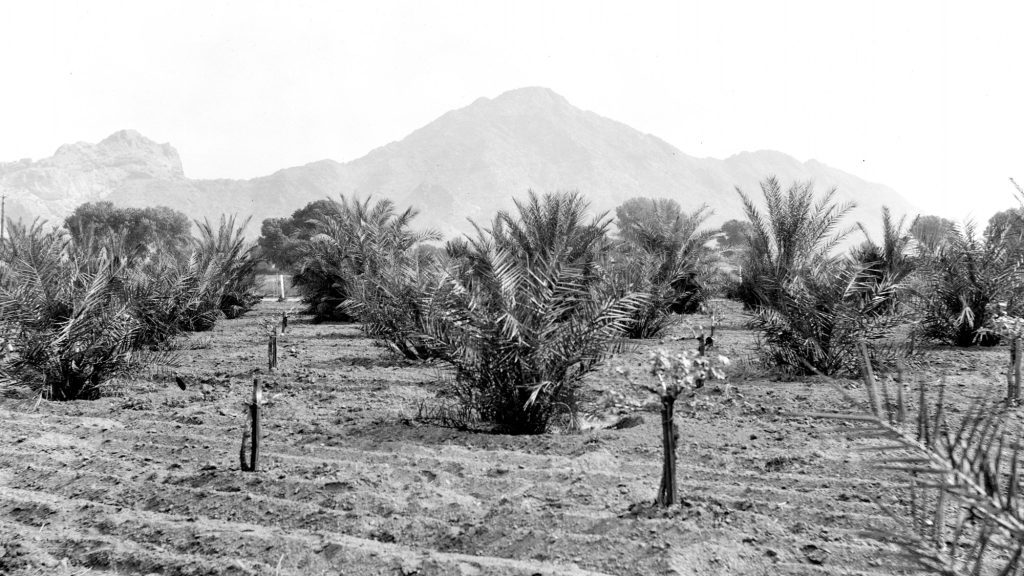
A date palm orchard located at Indian School Rd. and 56th St. in Phoenix, 1927.
Black Sphinx is considered a “wet” date, meaning the fruit stays softer and juicier than many of the more familiar commercially grown dates. They’re smaller than Medjool dates, but what really sets them apart for me is the flavor. Medjools are often described as rich and caramel-like, while Black Sphinx has a sweeter, honey-like flavor. Fresh Black Sphinx dates are so creamy, you can use them as a spread on toast!
You also don’t see Black Sphinx dates grown commercially very often. The fruit is delicate, highly perishable, and more difficult to grow, harvest, handle, and ship compared with varieties better suited for commercial production. That’s part of what makes having a Black Sphinx palm in our backyard feel so special.
Almost 100 years after that original Black Sphinx seedling was discovered right here in Phoenix, it’s pretty amazing that we can continue a little piece of that local history by growing and harvesting this rare date in our own backyard. 💕
And our little date palm collection is still growing! We currently have Black Sphinx and Barhi, and we have space for one more rare and delicious variety. If you have a favorite date variety you think we should grow, let us know!
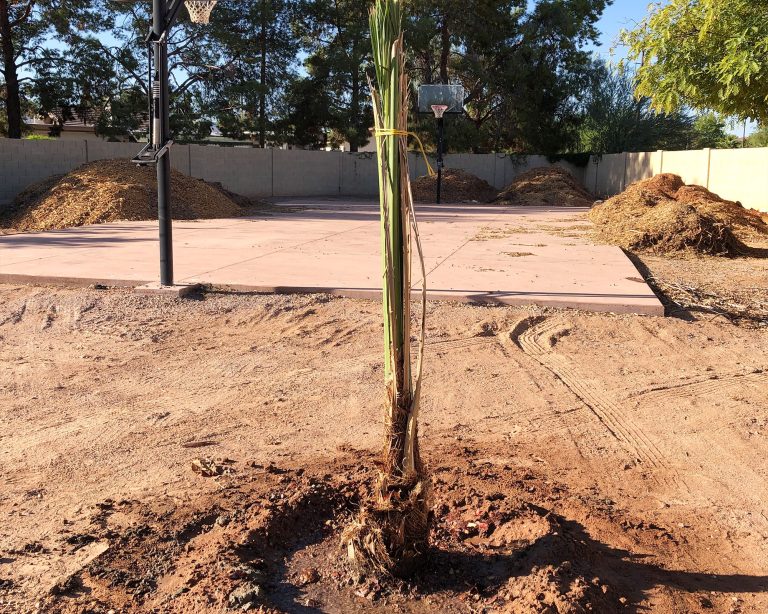
We planted a Barhi date palm a few months after we planted our Black Sphinx date palm.
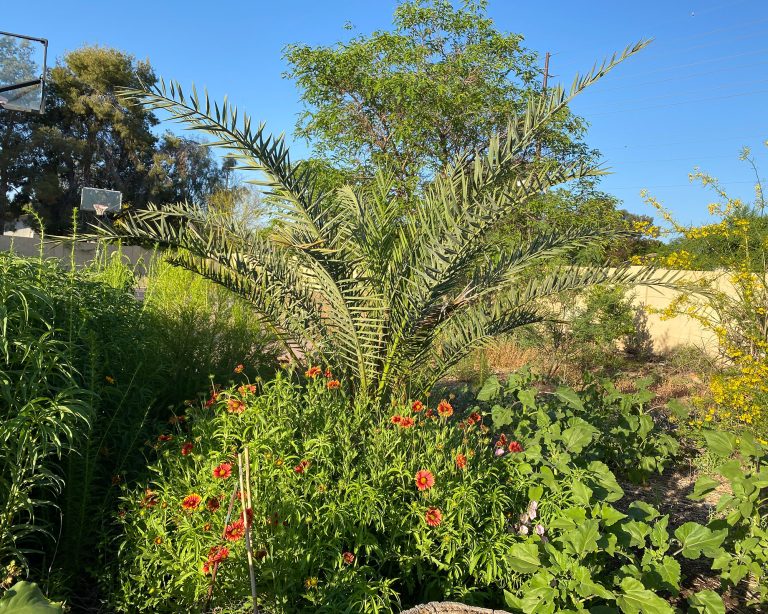
We practice watering "just enough," and that kept our date palms growing at a relatively slow rate compared to normal. But we like to plant various pollinator-friendly ground covers around our trees, as you can see here.
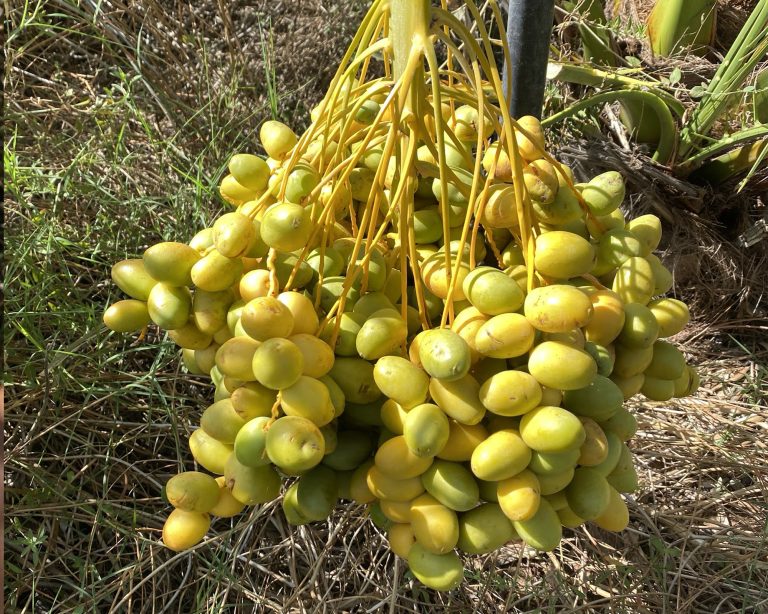
We’re also working on a YouTube video about date palm cultivation and harvesting, which we’ll put together once this season is over. We want to share the whole process and everything we’ve learned so far, from growing and pollinating our palms to protecting the fruit and finally harvesting and storing fresh dates.
There has definitely been a lot of learning along the way, and we’re excited to share it with you!